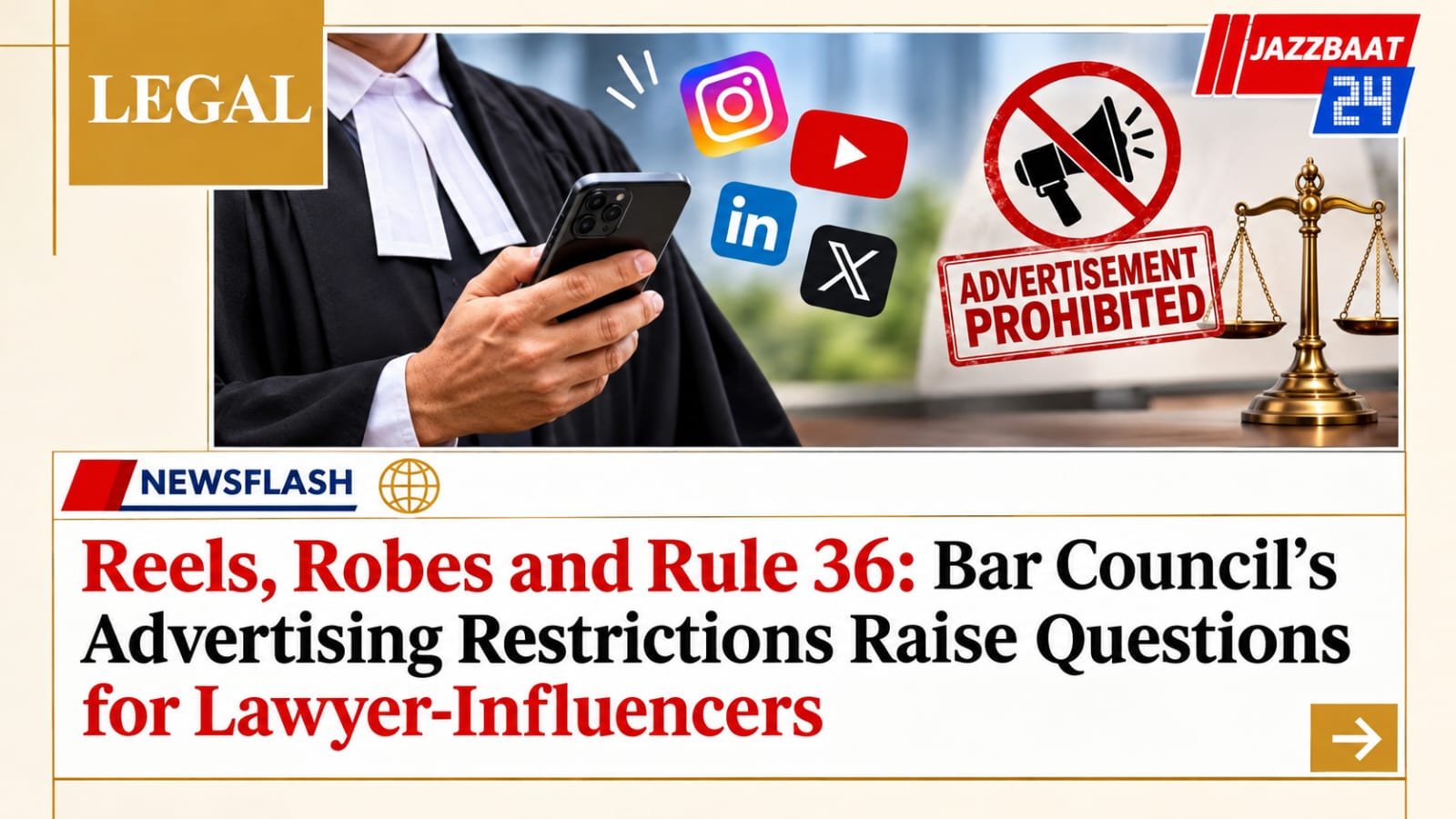
Legal:The growing presence of lawyers on social media platforms such as Instagram, YouTube and LinkedIn has brought renewed attention to the Bar Council of India's restrictions on professional advertising.
Lawyers are increasingly using digital platforms to explain legal developments, discuss important judgments and educate the public about their legal rights. At the centre of the debate is Rule 36 of the Bar Council of India (BCI) Rules, which prohibits advocates from advertising their services or soliciting professional work, either directly or indirectly.
What Does Rule 36 Say?
Rule 36 clearly states that an advocate shall not solicit work or advertise their professional services through advertisements, circulars, touts, personal communications or other indirect methods.The rule also restricts interviews that are not justified by personal relations, encouraging newspaper comments and publishing photographs in connection with cases in which an advocate is involved.The objective is to maintain the dignity, independence and professional ethics of the legal profession by preventing lawyers from treating legal practice as a commercial business.
The Rise of Lawyer-Influencers
With the expansion of social media, many advocates have started creating short videos, reels and informative posts explaining legal provisions, court judgments and important developments.These platforms allow lawyers to reach a much wider audience and make complicated legal issues easier for ordinary people to understand.LinkedIn has also emerged as a platform where legal professionals share their expertise, professional achievements and views on legal developments.However, the growing digital presence has raised an important question: where does legal awareness end and professional advertising begin?
Information or Indirect Advertisement?
The distinction between sharing legal knowledge and promoting professional services is becoming increasingly significant.An advocate explaining a legal provision or discussing a landmark judgment may be engaging in public legal education. However, using social media content to attract potential clients, solicit cases or indirectly promote professional services could raise concerns under Rule 36.The nature, purpose and presentation of such content become important factors in examining whether it amounts to prohibited solicitation or advertising.
A New Challenge for Legal Ethics
The increasing use of digital platforms has created new challenges for professional regulation in the legal sector.While social media offers lawyers an opportunity to contribute to public awareness and legal education, professional conduct rules continue to govern how advocates present themselves and their services.




Reader Comments 0