
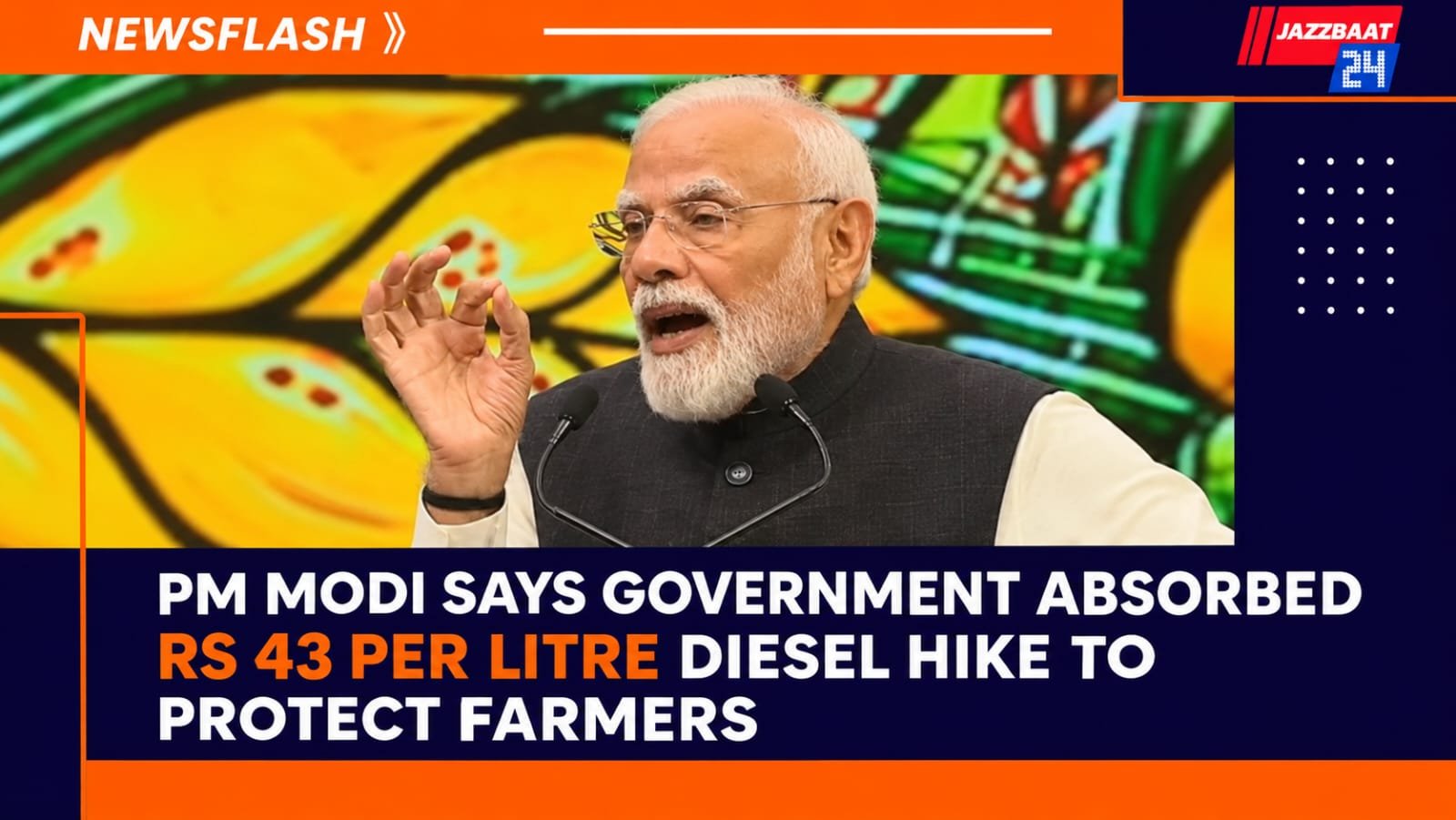
Prime Minister Narendra Modi has said the central government absorbed Rs 43 out of a potential Rs 50 per litre increase in diesel prices to protect Indian farmers and consumers from the impact of rising international crude oil prices. Addressing the Kisan Tak Bharat Agriculture Conference 2026 in New Delhi on November 12, he explained how the government limited the diesel price increase to just Rs 7 per litre instead of passing on the entire burden to the public.
According to Modi, the situation became challenging when crude oil prices in the international market surged from around $70 to $122 per barrel within a few weeks amid escalating tensions in West Asia. The sharp increase created pressure to raise domestic diesel prices by approximately Rs 50 per litre.
However, the Prime Minister said the government decided not to transfer the entire financial burden to farmers and ordinary consumers. Instead, it absorbed Rs 43 per litre of the potential increase, allowing diesel prices to rise by only Rs 7 per litre.
Modi further claimed that the government has been bearing a financial burden of approximately Rs 14,000 crore every month to protect consumers from international fuel price fluctuations. He also pointed out that diesel prices had increased by 40 to 50 per cent in several neighbouring countries during the same period, while India limited the impact.
Rs 16 Lakh Crore Spent on Fertiliser Support
During his address, the Prime Minister also highlighted the government's expenditure on keeping fertilisers affordable for farmers. He said approximately Rs 16 lakh crore had been spent over the past 12 years to ensure that farmers could purchase essential agricultural inputs at subsidised rates.
Citing examples, Modi said a bag of Di-Ammonium Phosphate (DAP), which costs around Rs 5,000 in the international market, is being made available to Indian farmers for Rs 1,300. Similarly, urea costing approximately Rs 3,000 internationally is supplied to farmers for less than Rs 300.
Focus on Reducing Farming Costs
The Prime Minister stressed that controlling agricultural input costs remains essential to improving farmers' incomes. He also highlighted initiatives involving solar-powered irrigation, modern agricultural technology and crop diversification.
Referring to the PM-KUSUM scheme, Modi said nearly 12 lakh solar pumps had been provided to farmers, helping reduce electricity expenses and creating opportunities for additional income through solar energy.
He reiterated that protecting farmers from global economic uncertainties and making agriculture more profitable are important steps towards achieving the vision of Viksit Bharat by 2047.



Reader Comments 0