
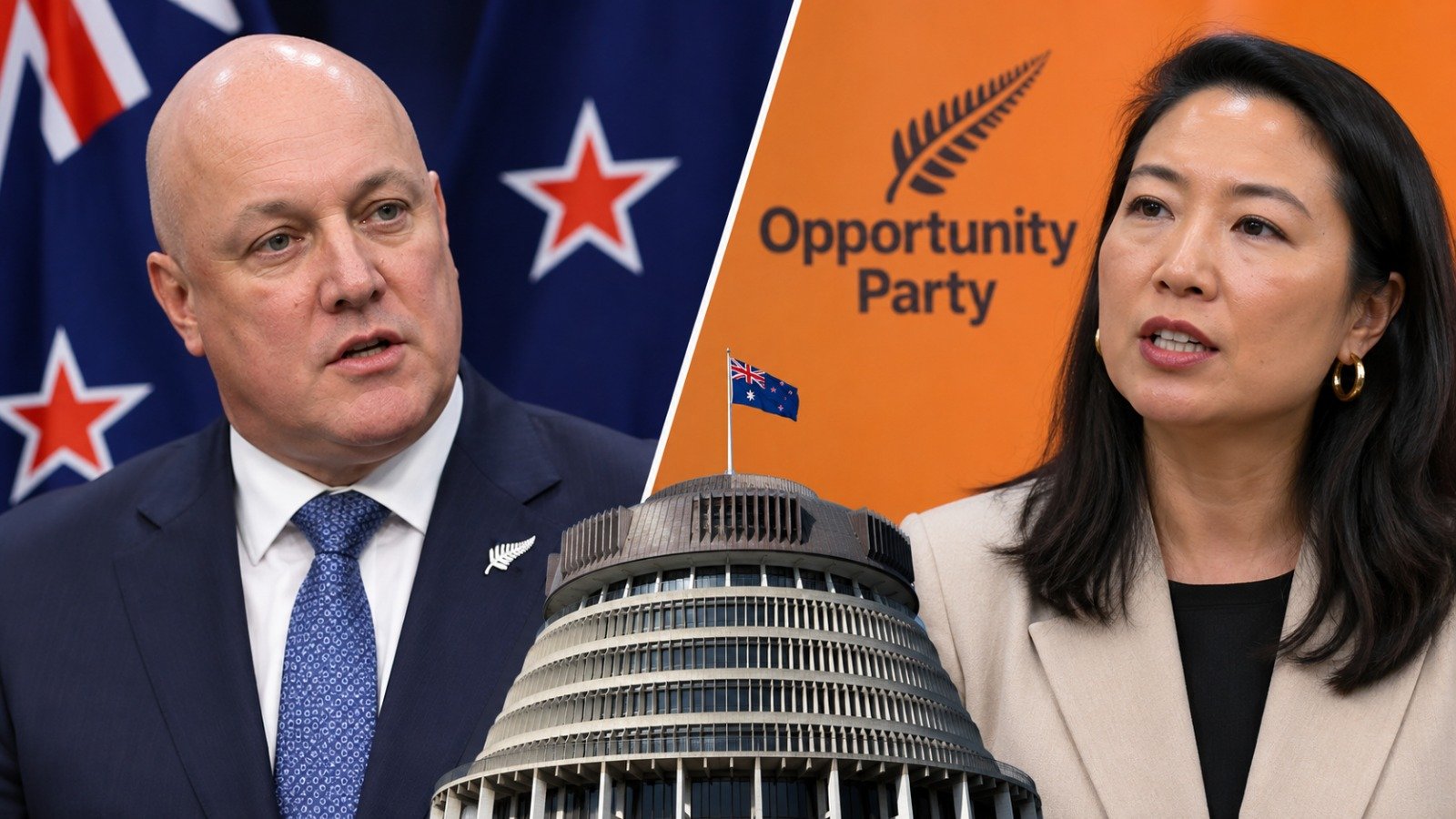
Ehtisham Qudrat, Wellington: New Zealand's final election results on Friday, November 27, have left the country's political landscape deadlocked, with neither the ruling right-wing bloc nor the left-wing opposition securing enough seats to form a majority government. The outcome has given the centrist Opportunity Party, a newcomer to Parliament, the decisive role in determining the country's next government.
According to The Associated Press (AP), the final vote count published on Friday, November 27, 2026, showed that Prime Minister Christopher Luxon's National-led right-wing bloc secured 65 seats in the 130-member Parliament, falling one seat short of the 66 required for a majority.
The left-wing opposition bloc, led by the Labour Party's Chris Hipkins, won 58 seats, while the Opportunity Party secured seven seats, putting it in a position to influence government formation.
The final count followed the counting of approximately 400,000 special votes, including ballots cast by New Zealanders living overseas. The additional votes cost National two seats, reducing its total to 40, while Labour gained one seat to finish with 36.
Christopher Luxon Faces Difficult Coalition Negotiations
Despite the deadlock, Luxon remains the only leader with a viable path towards forming the next government. However, he will need the support of the Opportunity Party and his traditional coalition partners, the libertarian ACT Party and populist NZ First.
Luxon expressed confidence that he could secure an agreement but acknowledged that negotiations could take time.
"These negotiations may be challenging and they could take some time," he said. “But getting it right matters far more than getting it done quickly.”
The negotiations could prove difficult because several of the Opportunity Party's policies, particularly its environmental agenda and opposition to bottom-trawling fisheries, conflict with the positions of ACT and NZ First.
Qiulae Wong Emerges as Political Kingmaker
The Opportunity Party is led by 38-year-old business consultant Qiulae Wong, a political newcomer whose party entered Parliament with seven seats.
Wong has said her party is willing to negotiate with either political side. However, she has made clear that it will not compromise on its core policy commitments.
She has also ruled out joining a government in which NZ First leader Winston Peters serves as foreign minister, citing his controversial remarks about Asian people.
Wong said the party would consider either a formal coalition arrangement or a confidence-and-supply agreement, under which its lawmakers would support key government legislation and consider other bills individually.
Major Parties Face Voter Discontent
The election results also represented a setback for New Zealand's two major political parties. National secured 28.35% of the preferred party vote, while Labour received 29.88%.
Analysts attributed the outcome partly to voter dissatisfaction over rising living costs and limited enthusiasm for both major party leaders.
If coalition negotiations fail, New Zealand could face another election, although Luxon remains confident about forming a government.



Reader Comments 0