
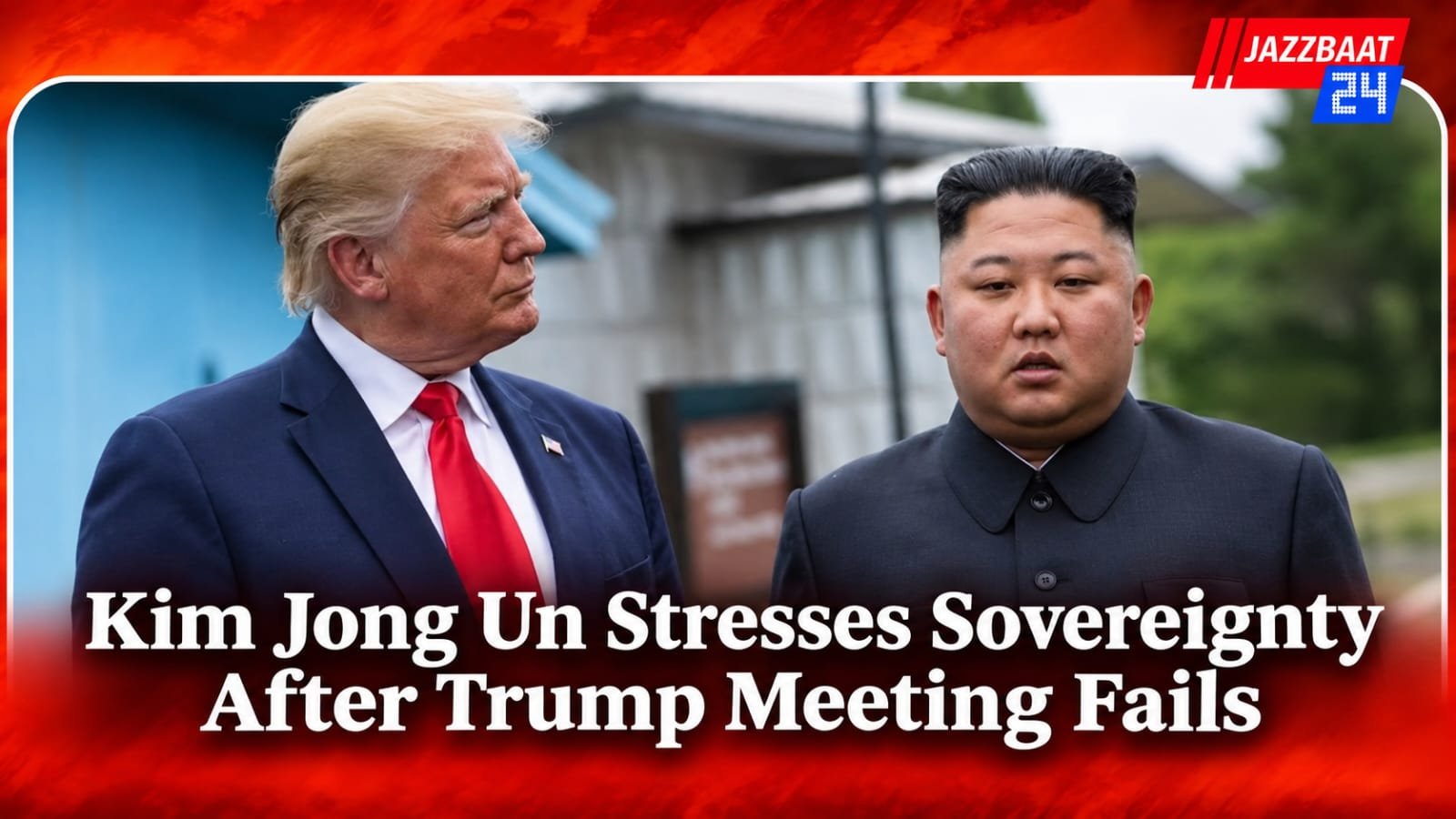
North Korean leader Kim Jong Un has reiterated his country's commitment to protecting national sovereignty while expanding diplomatic relations with friendly nations, days after US President Donald Trump left Asia without meeting him. Kim's remarks signal Pyongyang's continued focus on independence, national security and strengthening international partnerships amid growing global tensions.
Kim made the comments on Sunday, November 22, during a ceremony in Pyongyang where he personally received credentials from newly appointed foreign ambassadors. The event was attended by diplomats representing 10 countries, including Russia, Sweden, Indonesia, Vietnam, Brazil, the Czech Republic, India, the Philippines, Thailand and Bangladesh. North Korean Foreign Minister Choe Son Hui was also present.
Addressing the gathering, Kim said North Korea wanted to develop relations with other countries based on independence, peace and friendship. He stressed that protecting national sovereignty and security would remain central to the country's foreign policy.
He also described the international situation as increasingly unstable, pointing to security challenges and political and economic uncertainty across the world. According to Kim, the changing global environment has made national sovereignty and security more important than ever.
Defending North Korea's military expansion, Kim said the country needed sufficient strength and capabilities to ensure its security and maintain peace. He insisted that Pyongyang had no ambitions of regional dominance or territorial expansion, describing its defence policy as focused on protecting the country from external threats.
The diplomatic event came shortly after Trump's five-day Asia visit ended without a meeting with the North Korean leader. Trump had repeatedly expressed interest in meeting Kim during his visit to China for the Asia-Pacific Economic Cooperation summit. However, no discussions took place.
Trump had previously indicated that he remained open to direct engagement with Pyongyang. US officials also suggested that dialogue could help address longstanding tensions surrounding North Korea's nuclear and missile programmes.
Kim's decision to personally receive diplomatic credentials has also attracted attention. The responsibility was traditionally handled by a senior parliamentary official. However, constitutional changes introduced in March gave the chairman of the State Affairs Commission, a position held by Kim, the authority to perform the diplomatic function.
The development comes as North Korea continues to strengthen its relationship with Russia, including through military cooperation linked to the Ukraine conflict. Pyongyang has also maintained its nuclear weapons programme despite international sanctions.
Kim's latest remarks suggest that North Korea intends to pursue broader diplomatic engagement while keeping sovereignty, military security and national independence at the centre of its international policy.


Reader Comments 0