
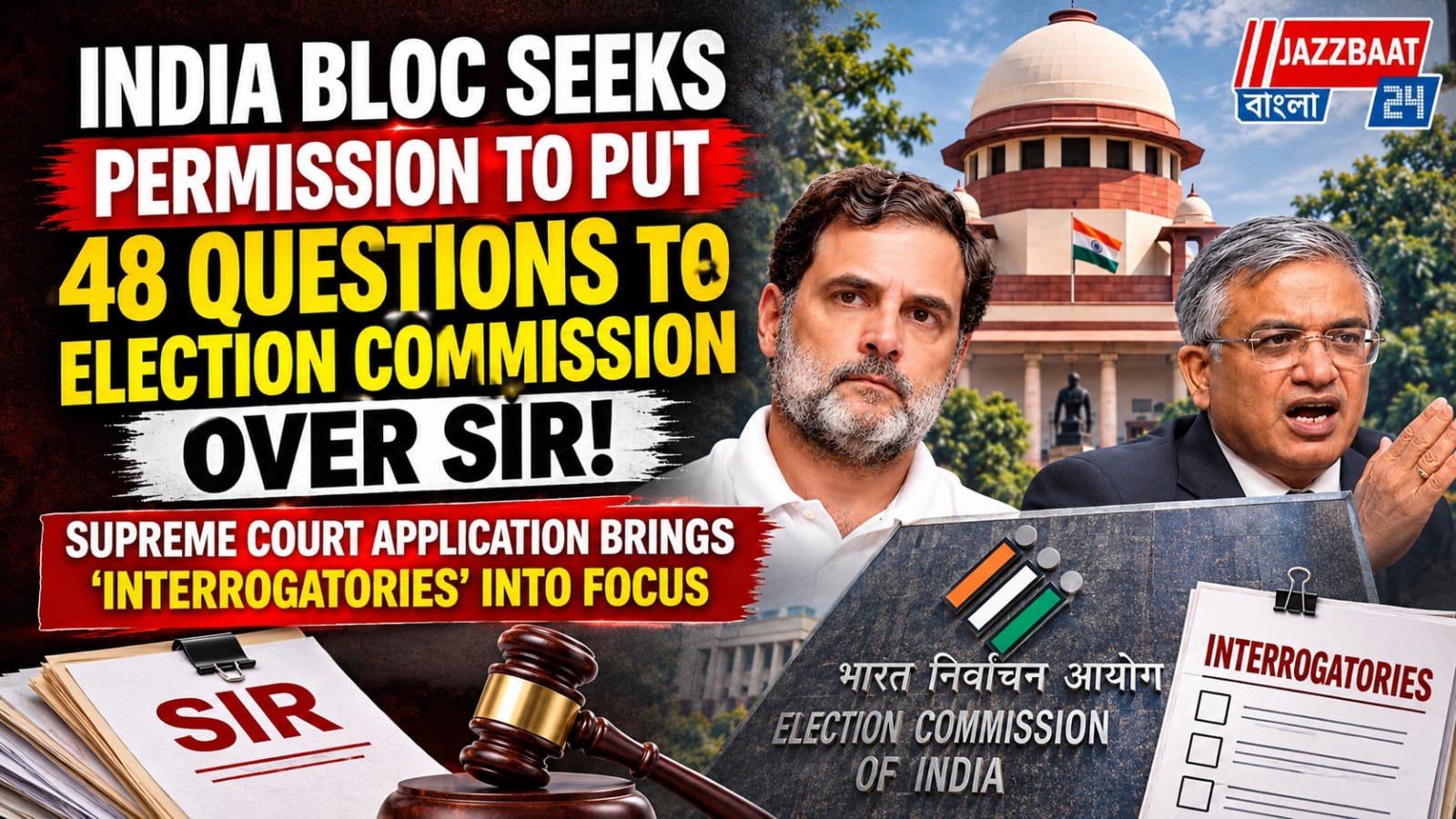
New Delhi,NOV:19 : The controversy surrounding the Election Commission of India's (ECI) Special Intensive Revision (SIR) of electoral rolls has taken a significant legal turn. Leader of the Opposition in the Lok Sabha Rahul Gandhi, along with several other INDIA bloc leaders, has approached the Supreme Court seeking permission to serve 48 written questions, known as ‘interrogatories’, on the Election Commission.
The application has brought renewed attention to an important procedural mechanism under civil law — interrogatories, governed by Order XI of the Code of Civil Procedure, 1908 (CPC).
Interrogatories are a set of formal written questions that one party to a legal proceeding can seek permission to put to the opposing party. The objective is to obtain relevant information, clarify disputed facts and narrow down the issues involved in a case, potentially avoiding unnecessary delays in litigation.
However, such questions cannot be asked arbitrarily. They must be relevant to the issues involved in the proceedings, and their use is subject to the court's permission.
In the present case, the INDIA bloc leaders want the Election Commission to respond to 48 questions concerning the decision-making process behind the SIR exercise and various aspects of the electoral roll management system.
One of the key issues raised by the petitioners concerns whether decisions relating to the SIR were taken collectively by all three members of the Election Commission or whether certain decisions were made unilaterally by the Chief Election Commissioner.
The opposition leaders have also sought information regarding the records, file numbers, meeting minutes and approvals supporting the Commission's decisions.
The questions reportedly cover several technical and administrative aspects of electoral roll management, including access to voter data, the role of private agencies and contractors, the functioning of the ECINET platform and safeguards against unauthorised changes to electoral records.
Other issues include the process of deleting or restoring voters' names, the introduction of additional declarations in online Form 6 and whether any objections or differences of opinion arose among members of the Election Commission during the decision-making process.
The application has been moved by Rahul Gandhi and Congress president Mallikarjun Kharge, along with several INDIA bloc leaders, including Trinamool Congress MP Saugata Roy, Samajwadi Party chief Akhilesh Yadav, RJD leader Tejashwi Yadav and Shiv Sena (UBT) leader Sanjay Raut, among others.
The Election Commission, however, has opposed the move. During the proceedings , senior advocate Harish Salve, appearing for the Commission, conveyed its objections to the proposed interrogatories.
The Supreme Court has scheduled the matter for its next hearing on December 9.
The legal significance of the application lies in the possible use of interrogatories to seek specific answers from a constitutional authority in ongoing judicial proceedings. While the INDIA bloc leaders are seeking greater transparency and accountability in the SIR exercise, the Election Commission has raised objections to the proposed procedure.
The Supreme Court's decision on whether to allow the 48 questions could therefore become an important development in the ongoing legal and political debate over electoral transparency, voter rights and the functioning of the Election Commission. <This message was edited>


Reader Comments 0