
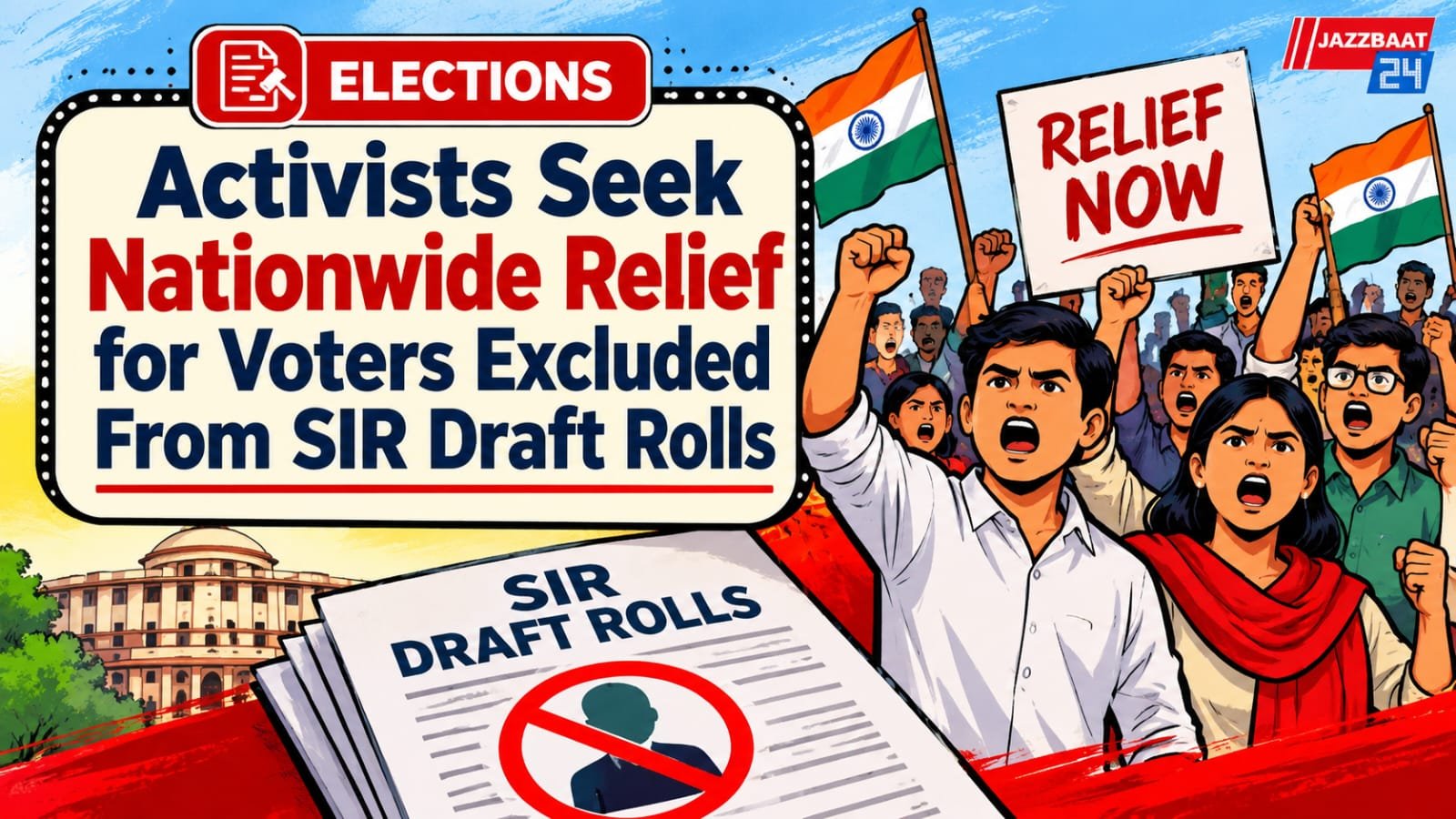
New Delhi: Activists Anjali Bhardwaj and Amrita Johri have urged the Election Commission of India (ECI) to extend its November 6 relief measures to voters across the country who have been left out of the draft electoral rolls during the Special Intensive Revision (SIR) exercise. They have demanded that the facility should not remain restricted to seven states where the revision process is currently underway.
In their representation to the poll body, the activists called for every eligible voter whose name appeared on the Absent, Shifted, Dead and Duplicate (ASDD) lists to receive another opportunity to establish their eligibility and secure inclusion in the final electoral rolls.
The Election Commission announced the revised relief procedure on November 6 following concerns raised during proceedings in the Supreme Court. The decision covered Delhi, Maharashtra, Haryana, Andhra Pradesh, Jharkhand, Telangana and Nagaland.
Under the revised arrangement, voters who were issued enumeration forms but whose forms were not received back can submit them again, along with a statement explaining why they could not participate in the earlier process. The Commission also directed officials to make fresh attempts to contact such voters through Booth Level Officers (BLOs), including house-to-house visits, telephone calls, WhatsApp messages, emails and SMS.
The relief also provides provisions for voters who have shifted residence within the same state. They can submit their enumeration forms along with details of their new address and supporting documents. For homeless voters without conventional address proof, the BLO's field verification report can be accepted.
However, activists have questioned why similar relief has not been extended to voters in other states. They argue that the opportunity to correct errors and establish eligibility should not depend on whether a particular state is currently undergoing the SIR exercise.
The issue has assumed significance amid concerns over large-scale exclusions from draft electoral rolls. According to the activists, the ASDD classification has affected a substantial number of voters, and restricting the revised procedure could leave eligible citizens without an equally accessible mechanism to restore their names.
The November 6 decision followed earlier judicial observations questioning the requirement for previously registered voters to apply afresh through Form 6. The Supreme Court had also stressed the need for the Election Commission to proactively reach out to eligible voters who were missing from the draft rolls.
The activists' demand has now brought the question of uniform relief into focus. They want the Commission to ensure that every eligible voter, irrespective of their state, gets a fair opportunity to remain on the electoral roll and exercise their democratic right.

Reader Comments 0