
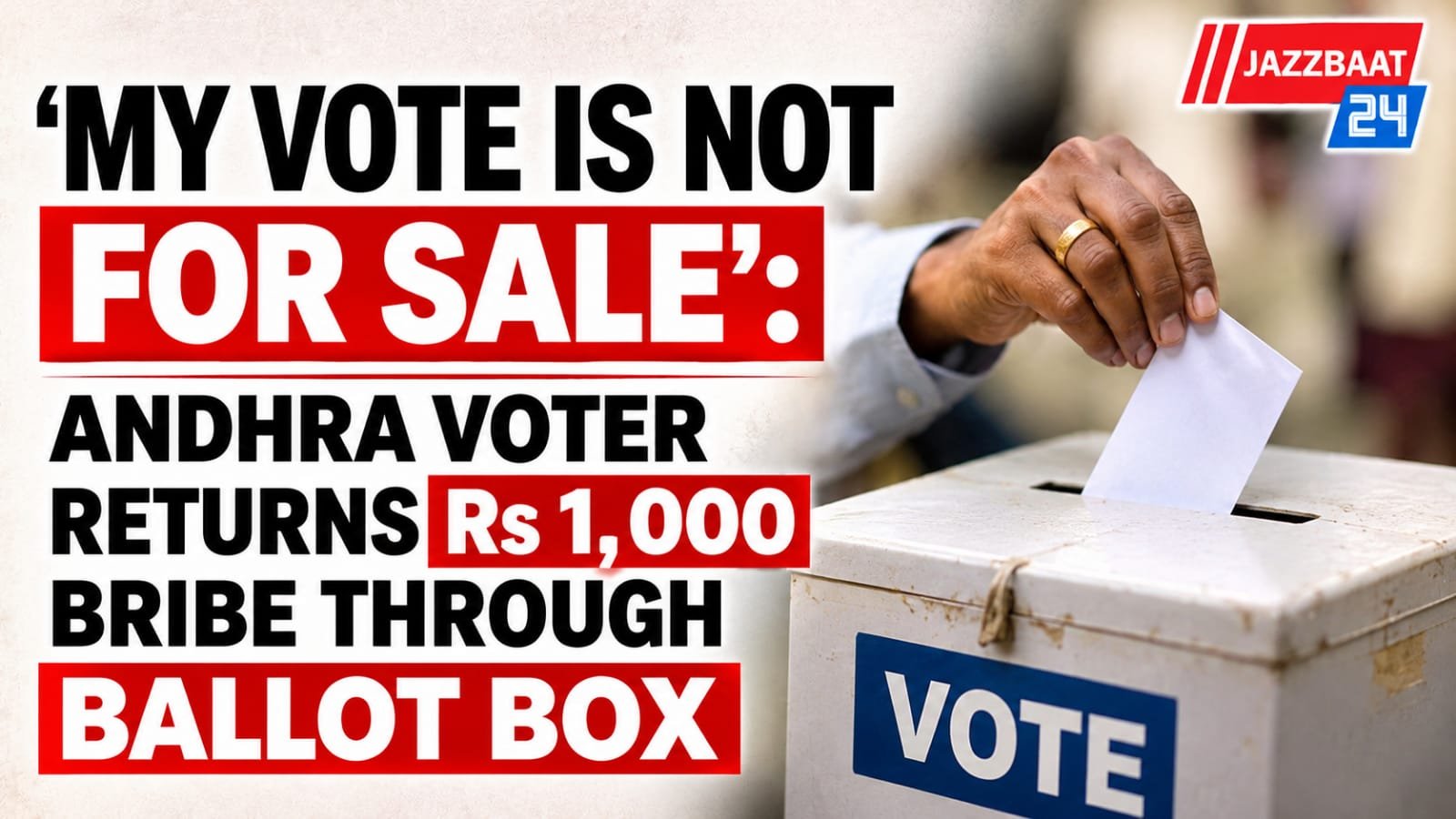
In a striking example of electoral integrity, a voter in Andhra Pradesh's Chittoor district has sent a strong message against money-driven politics by returning Rs 1,000 allegedly offered to influence his vote. The voter placed two Rs 500 currency notes along with a handwritten letter inside a ballot box during the recent local body elections.
The unusual incident came to light during the counting of votes at Palamaner Government Degree College. Election officials were checking the ballot papers when they discovered the two currency notes accompanied by a handwritten message.
The letter was addressed to the person who had allegedly given the voter money in exchange for electoral support. It carried a clear message rejecting the practice of buying votes.
"Sir, please take back the Rs 1,000 given by you. Taking back your money is not a matter of shame. I will not sell my vote for money. Thank you," the letter stated.
The voter reportedly belongs to Muram village in Palamaner rural mandal of Chittoor district. He participated in the Mandal Parishad Territorial Constituencies (MPTC) and Zilla Parishad Territorial Constituencies (ZPTC) elections, which determine representatives for two important tiers of rural local government.
Rather than allowing the alleged financial inducement to influence his electoral choice, the voter decided to return the money through the ballot box. His action quickly attracted attention among election officials and counting personnel.
Chittoor District Collector and District Election Officer Sumit Kumar appreciated the gesture, describing it as an inspiring example of democratic values, honesty and electoral integrity.
The Collector observed that accepting money in exchange for votes weakens democracy and affects the moral authority of citizens to question elected representatives about their performance during their five-year term.
Interestingly, the district had witnessed another election-related controversy earlier this month. A defeated municipal candidate, K Reddy Prasad, reportedly appealed to voters to return the Rs 1,000 allegedly distributed during his election campaign. He claimed that he had borrowed money to distribute cash among voters but still lost the election.
The latest incident has once again brought attention to the persistent problem of cash distribution during elections. While political parties and candidates often face allegations of attempting to influence voters through financial incentives, this voter's unusual protest has offered a different perspective.
His decision to return the money carries a simple but powerful message: a vote is a democratic right, not a commodity that can be purchased. The incident has also highlighted the importance of independent voting and the responsibility of citizens in protecting the democratic process.


Reader Comments 0