
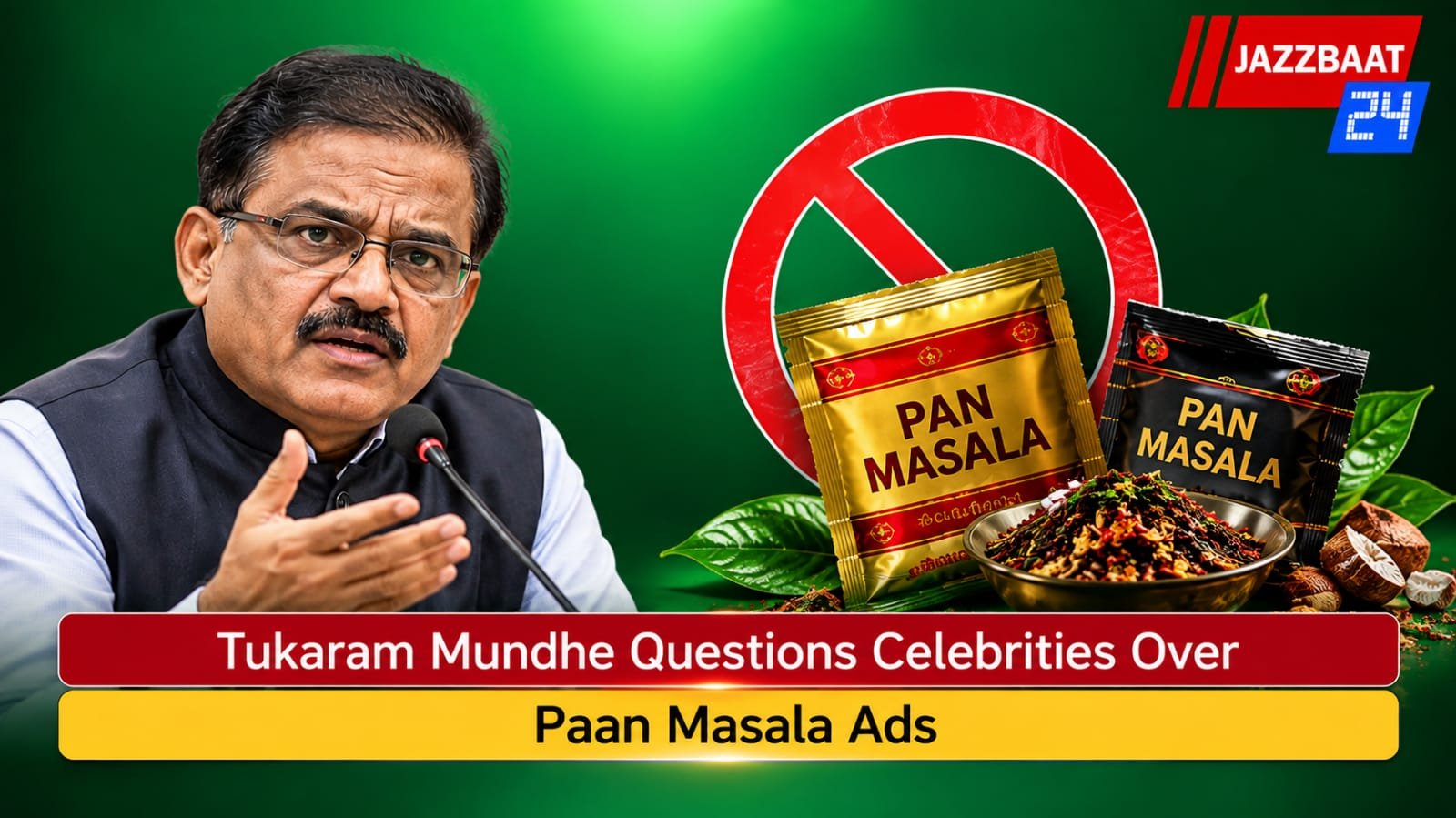
Maharashtra Food and Drug Administration (FDA) Commissioner Tukaram Mundhe has questioned celebrities and public figures who endorse paan masala and gutka-related products, asking whether they would encourage their own families to consume the same products they promote in advertisements.
Speaking at an NDTV event, Mundhe said that if celebrities publicly tell people that a product is good, they should be prepared to follow the same advice themselves. His remarks come amid regulatory action against Bollywood actors Shah Rukh Khan, Ajay Devgn and Tiger Shroff over their involvement in an advertisement for Vimal Elaichi.
The Maharashtra FDA has issued show-cause notices to the three actors, alleging that the advertisement could amount to surrogate or indirect promotion of pan masala or tobacco-related products. The notices were issued on August 11, 2026, under provisions of the Food Safety and Standards Act, 2006, and related regulations.
Mundhe argued that celebrities cannot simply claim that they are only acting in a commercial and therefore have no responsibility for the product being promoted. According to him, public figures also have a responsibility to understand the nature of the products associated with their image and advertisements.
The FDA commissioner also criticised what he described as “double standards” among people who maintain different standards in their personal and professional lives. He said that endorsement involves more than simply lending one's face or popularity to a brand.
The controversy centres on the Vimal brand, which the FDA said is prominently associated with pan masala in the market. The department has also pointed out that pan masala products are prohibited in Maharashtra.
The actors were given 15 days from the receipt of the notices to submit their written explanations. Mundhe later said that Shah Rukh Khan, Ajay Devgn and Tiger Shroff had responded to the notices.
The FDA has warned that if the explanations are not considered satisfactory, further action could be taken under applicable law.
Mundhe's comments have brought renewed attention to the responsibilities of celebrities who endorse consumer products, particularly advertisements that may have an indirect connection with tobacco or other regulated products. The matter is now being examined through the regulatory process, with the actors' responses forming part of the proceedings.
The issue also highlights the broader question of how advertising regulations apply when a product's branding is closely associated with another product category that faces restrictions. Further action, if any, will depend on the findings of the authorities and the applicable legal provisions.




Reader Comments 0