
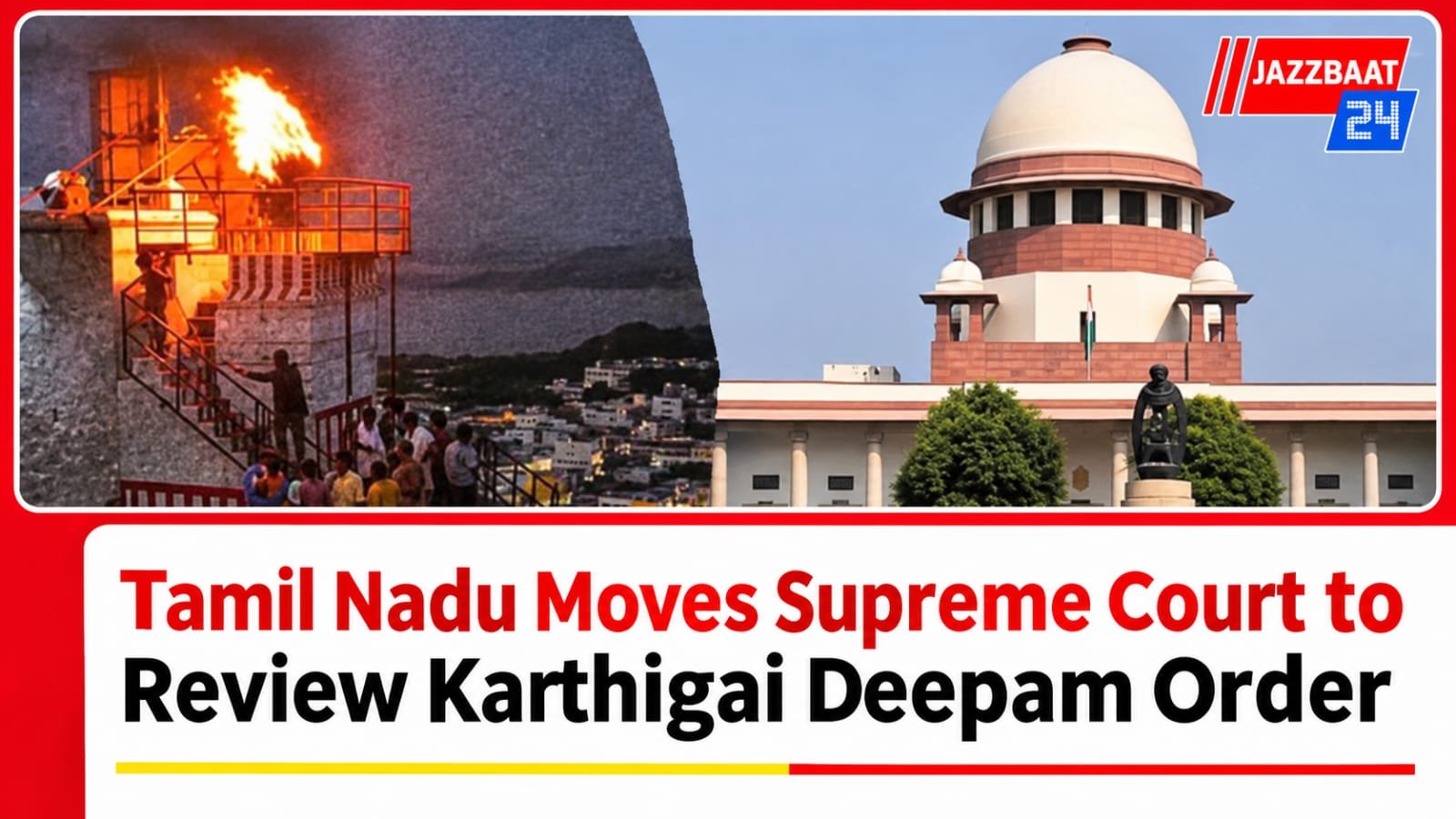
The Tamil Nadu government has approached the Supreme Court seeking a review of its November 20 order permitting the lighting of the traditional Karthigai Deepam lamp at a disputed stone pillar atop Thiruparankundram hill in Madurai. The move has added a fresh dimension to the ongoing religious and legal dispute ahead of the festival on November 24.
The review petition was filed on November 21 by the Commissioner of the state's Hindu Religious and Charitable Endowments (HR&CE) Department, just a day after the Supreme Court issued its interim directions.
A bench comprising Justices Aravind Kumar and Vipul M Pancholi had allowed the ceremonial lamp to be lit at the Deepathoon, a stone pillar situated on the hill, as a one-time arrangement for 2026. The court clarified that the permission would not establish any permanent or customary right to conduct the ritual at that location in subsequent years.
In its review petition, the state government has questioned the decision, arguing that the traditional practice has been to light the Karthigai Deepam at the Deepa Mandapam near the Uchippillaiyar Temple. According to the government, there is no established custom of conducting the ceremony at the disputed stone pillar.
The state has also raised concerns over the potential law-and-order situation and communal harmony, as the Deepathoon is located approximately 50 metres from the Hazrat Sultan Sikandar Badusha Auliya Dargah.
The government has reportedly sought an immediate stay on the Supreme Court's directions, arguing that allowing the ceremony before the review is decided could make the petition ineffective.
Strict conditions imposed by Supreme Court
Under the November 20 order, only authorised representatives of the temple administration and government officials will be allowed to access the location for lighting the lamp. Public gatherings, processions, demonstrations and slogan-raising have been prohibited.
The Madurai District Collector has been appointed as the nodal officer to coordinate arrangements with the temple administration, police and Archaeological Survey of India. The court has also permitted the deployment of additional security forces, including central forces if necessary.
The Supreme Court clarified that existing religious practices at customary locations and lawful activities at the adjoining dargah must continue without interference.
The dispute is expected to return before the Supreme Court for a detailed hearing in January 2027. Meanwhile, the government's review petition has brought renewed attention to the sensitive issue of religious practices, customary rights and public order in Tamil Nadu.

Reader Comments 0