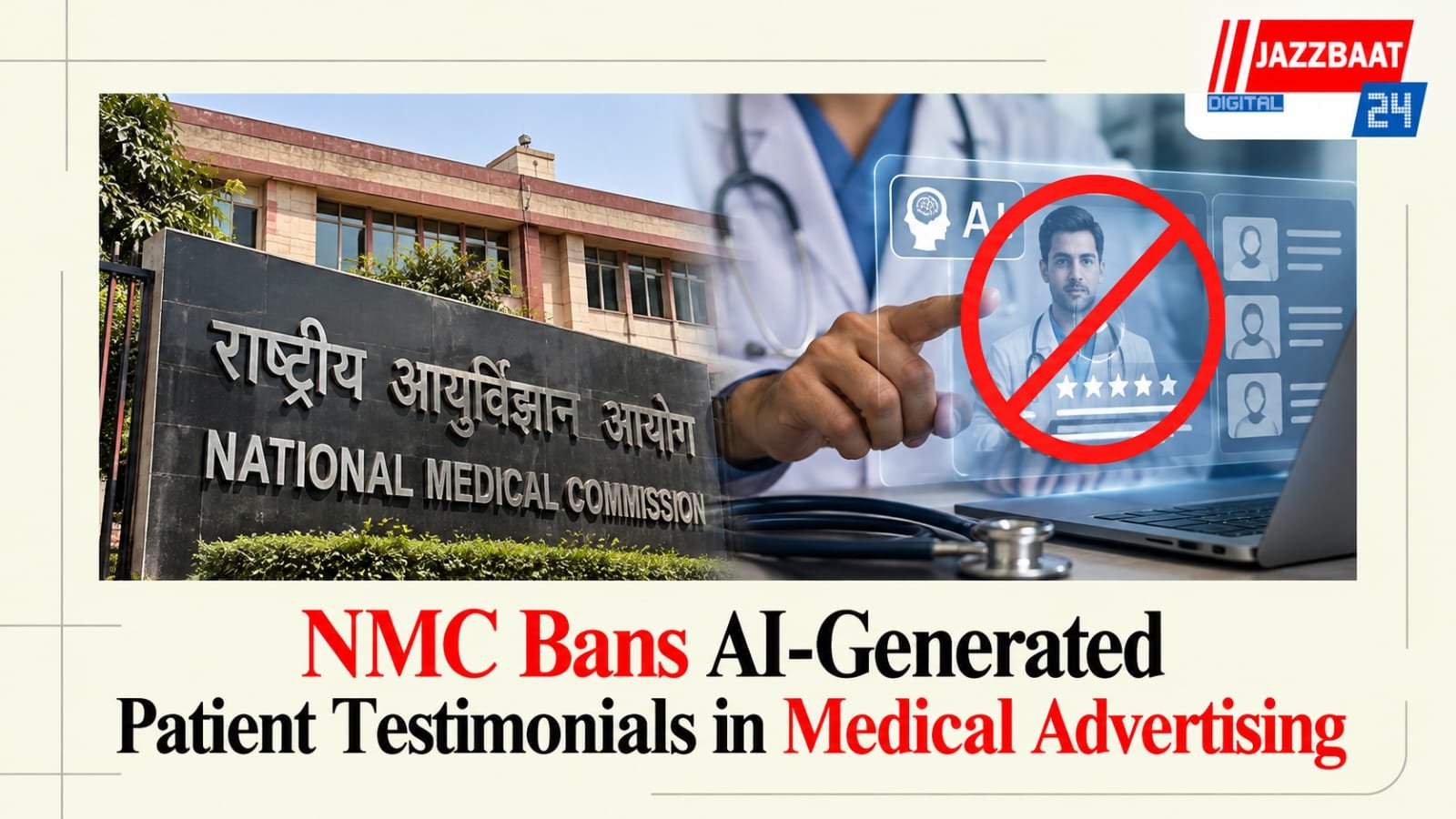
The National Medical Commission (NMC) has introduced new ethical guidelines restricting the use of artificial intelligence in medical advertising. Under the rules, doctors and hospitals cannot use AI to create or circulate fabricated patient testimonials, clinical outcomes, voices or endorsements to promote medical services.
The guidelines, issued on Wednesday, have come into effect immediately. The move comes amid growing use of AI-generated content, which can make artificially created material appear authentic and potentially mislead patients about the effectiveness of medical treatments.
Doctors and hospitals are also prohibited from making unverifiable promotional claims such as “best”, “number one”, “most trusted”, “guaranteed cures” or “100% success”. Such claims can only be made when they can be objectively verified.
The NMC has introduced a graded system of disciplinary action for violations. A first offence can result in a warning and mandatory ethics training. A second violation may lead to censure and a financial penalty, while a third violation could result in suspension for three to six months.
More serious violations may attract suspension for six to 12 months. Repeated violations could eventually lead to removal from the medical register for one to three years.
The guidelines also prohibit registered medical practitioners and hospitals from using AI-generated material to advertise services, solicit patients or circulate unverifiable information about diagnoses, treatments and clinical outcomes.
Another important provision concerns online visibility. Doctors are barred from paying to manipulate their rankings on search engines and digital platforms. The NMC has also placed restrictions on arrangements involving influencers, advertising agencies or online platforms where payment is linked to bringing patients to doctors or hospitals.
Medical establishments cannot use limited-period discounts, coupons, gift packages or referral benefits in ways that could encourage unnecessary consultations or treatments.
The new rules further regulate the use of patient photographs and require valid consent along with appropriate safeguards. Patient testimonials, before-and-after photographs and treatment-success claims are restricted when they could create unrealistic expectations or mislead people about possible treatment outcomes.
However, the guidelines do not prevent doctors from using social media altogether. Medical professionals can continue to share factual, non-promotional health information, while hospitals can provide objective details about their services.
The NMC's approach is aimed at creating a clear distinction between health education and medical promotion. Doctors can communicate useful information online, but such communication should not turn into advertising based on exaggerated claims, financial incentives or fabricated evidence.
By specifically addressing AI-generated testimonials, voices and clinical outcomes, the guidelines extend existing ethical standards into the rapidly evolving digital environment. The commission's latest rules effectively place AI-generated medical promotion under the same scrutiny as conventional advertising practices, with patient safety and informed decision-making at the centre.



Reader Comments 0